
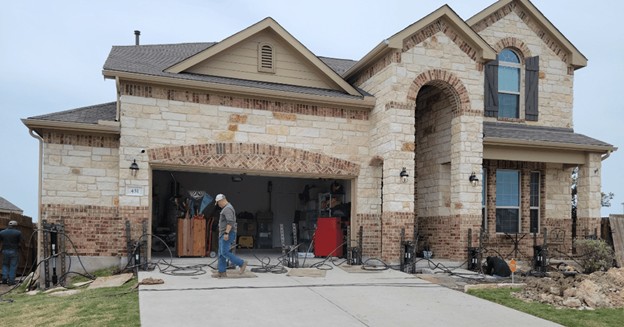
How to Build a Slab Foundation in Dallas?
Building a house starts with a solid base. In North Texas, the dirt is tricky. It moves a lot because of the heavy clay content. If a crew builds a foundation poorly, the house will eventually crack and shift.
Most builders choose a concrete slab because it is tough and simple. However, doing it right requires careful steps to handle the local soil. This guide explains how the pros set things up to avoid the need for slab foundation repair down the line.
Site Preparation and Clearing
The crew starts by removing all grass, rocks, and trees. They must reach a layer of dirt that can hold weight. If they leave roots in the ground, those roots will rot. This creates “voids” or empty pockets under the concrete.
These holes cause the slab to drop later. Clearing the site properly ensures the house sits on a clean and flat surface from day one.
Soil Testing and Engineering
Soil in this area is like a sponge. It swells when wet and shrinks when dry. Engineers test the dirt to see how much it moves. They design the slab to handle this “heave.”
They might suggest adding chemicals to the dirt to make it more stable. Knowing the dirt’s limits helps builders create a design that won’t snap under pressure. This planning prevents future foundation repair in Dallas.
Proper Grading
The ground must be perfectly level. If one side is higher, the concrete will be thicker in some spots than others. This causes “differential settling,” where one side of the house sinks faster than the rest.
Pros use lasers to make sure the dirt is flat. They also ensure the ground around the house slopes away from the slab. This keeps water from pooling next to the concrete.
Compacting the Dirt
Loose dirt is a disaster for a home. Workers use heavy machines to smash the soil down. This removes air pockets and packs the clay tightly. They often add a layer of gravel on top.
Gravel provides a stable base and helps with drainage. A well-packed base keeps the slab from shifting when the house gets heavy with furniture and people.
Installing the Plumbing
Before the concrete goes down, the pipes go in. Plumbers lay out the sewer lines and water pipes. They must wrap these pipes in foam. This allows the pipes to move a little bit without breaking.
If a pipe leaks under the slab, the water will wash away the dirt. This leads to a “hollow” spot that causes the concrete to crack. Fixing a leak under concrete is a very tough job.
Moisture Barriers
Pros lay down a thick plastic sheet over the dirt. This is a vapor barrier. It stops moisture from the ground from soaking into the concrete. Concrete is actually porous, meaning it has tiny holes.
Without plastic, water travels up and ruins your wood floors or carpet. The barrier also keeps the concrete from drying too fast while it cures, which makes it stronger.
Steel Reinforcement
Concrete is great at being squeezed, but it snaps if you pull it. To fix this, workers add steel. They use rebar or post-tension cables. Post-tensioning involves heavy steel cables inside the slab.
Once the concrete hardens, workers tighten these cables with a huge jack. This squeezes the slab together, making it act like a giant, solid rock. This strength is vital for lasting slab foundation repair prevention.
The Concrete Pour and Cure
Finally, the trucks arrive. Workers pour the mix and smooth it out. They must use the right amount of water. If the mix is too thin, the slab will be weak. Once poured, the concrete needs time to “cure.”
This is a chemical reaction, not just drying. Pros might spray water on the slab for a few days to keep it cool. A slow cure prevents surface cracks.
7 Cases You Need Immediate Slab Foundation Repair in Dallas
Even with a good build, the Texas weather is brutal. Droughts and floods can mess with any home.
Here are seven signs that you need to call a pro for foundation repair in Dallas right away.
Large Cracks in Exterior Brick: If you see “stair-step” cracks in the brick walls, your slab is moving. These cracks mean one corner of the house is dropping faster than the rest.
Doors That Stick or Won’t Close: When a house shifts, the door frames get crooked. If you have to lift or shove a door to lock it, the foundation is likely uneven.
Gaps Around Windows: If you see daylight between your window frame and the wall, the house is pulling apart. This lets in heat, bugs, and rain.
Cracked Interior Drywall: Cracks that run diagonally from the corners of door frames are a huge red flag. Small ceiling cracks can also mean the roof is twisting due to the base moving.
Sloping or Uneven Floors: If a marble rolls across your kitchen floor on its own, your house is tilting. You might also feel “low spots” when you walk through a room.
Separation of the Chimney: A chimney is heavy. If the foundation fails, the chimney might start to lean away from the rest of the house. This is a major safety risk.
Standing Water Near the Slab: If water pools against your foundation after rain, it will soften the soil. This causes “erosion” or “heaving,” which will ruin the slab quickly.
Frequently Asked Questions
Q.1) How long does a concrete slab take to fully dry before building?
Concrete hardens in a day but takes 28 days for full strength. You can usually start framing walls after one week, while the slab continues to cure.
Q.2) Why does the soil in Dallas move so much during seasons?
The local “expansive clay” acts like a sponge. It swells when wet and shrinks when dry, causing the constant shifting that leads to slab foundation repair needs.
Q.3) Can I fix foundation cracks myself with store-bought epoxy?
Cosmetic patches won’t stop a house from sinking. If the soil is moving, you need a pro to stabilize the base or install deep piers under the structure.
Q.4) Does watering my foundation really help prevent expensive damage?
Yes. Using a soaker hose keeps soil moisture steady during hot summers. This prevents the clay from shrinking and dropping the house, saving you from huge repair bills.
Q.5) What is the most common fix for a sinking slab?
Pros typically use piers. They drive steel or concrete poles deep into the earth until they hit rock, then use jacks to level and support the home permanently.
Q.6) Is foundation damage covered by my home insurance policy?
Standard plans usually exclude “earth movement.” However, coverage might apply if a plumbing leak caused the shift. Consult a concrete contractor for foundation repair in Dallas to find the cause.
Your Plan for a Solid Home
A house is only as good as the ground it sits on. By building with the right steel, drainage, and soil prep, you can keep your home level for years. If you start seeing cracks or stuck doors, don’t wait for the problem to get worse.
Small fixes are much cheaper than major structural work. For honest advice and a free on-site estimate, Top Level Foundation Repair offers expert help to keep your North Texas home stable and safe with a lifetime warranty.