

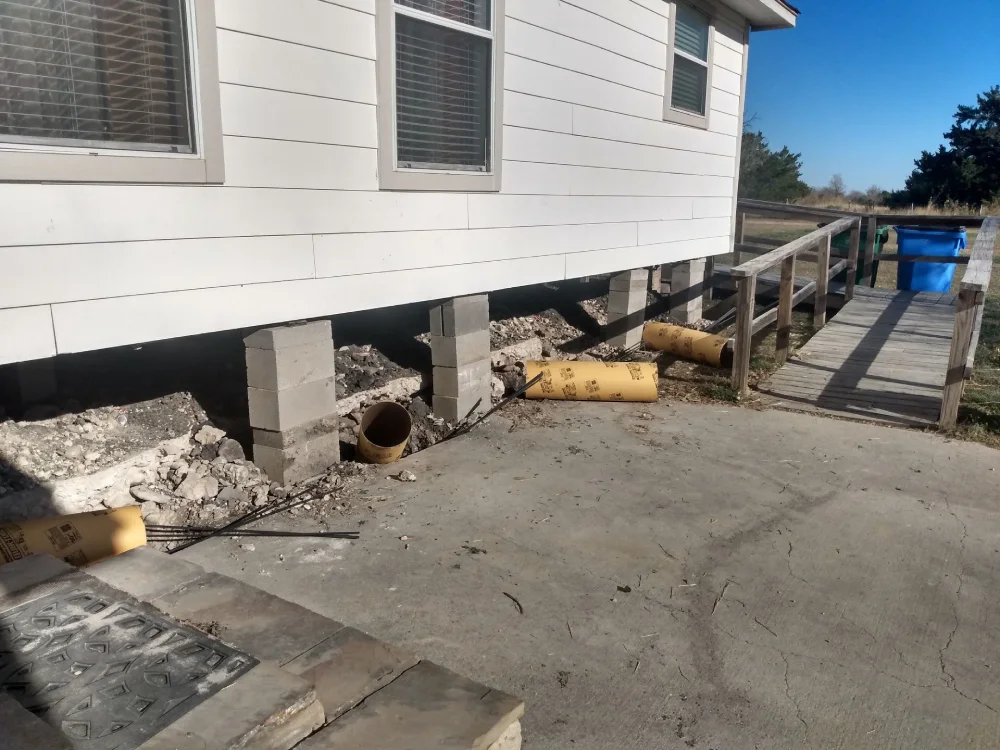
Pier and beam foundations are found in many older homes across Dallas, Fort Worth, and surrounding areas. Unlike concrete slab foundations, pier and beam homes sit elevated on wooden beams supported by concrete or steel piers. This design has advantages — but it also creates unique vulnerabilities, especially in North Texas where soil moisture changes dramatically with the seasons.
1. Sagging or Bouncy Floors
The most obvious sign of pier and beam foundation trouble is floors that feel soft, springy, or visibly sag in certain areas. This usually means the wooden beams underneath have rotted, warped, or that the piers supporting them have shifted or sunk. In severe cases, you can actually see the floor dipping when you walk across it.
2. Musty Odors or Visible Mold Under the Home
Pier and beam homes have a crawl space beneath them and that crawl space is vulnerable to moisture. When humidity, rainwater, or plumbing leaks get into the crawl space, wood beams begin to rot and mold grows. If you smell musty odors inside your home, especially in lower areas, moisture in the crawl space is often the cause.
3. Doors and Windows Misaligned
Just like slab foundations, pier and beam movement causes doors and windows to go out of square. But in pier and beam homes, this misalignment often appears more localized affecting one room or section of the house because individual piers can fail independently of each other.
4. Visible Damage to Beams or Piers in Crawl Space
If you can access your crawl space, look for cracked or crumbling concrete piers, wooden beams that show signs of rot, insect damage, or excessive moisture. Any visible deterioration in these structural elements needs immediate professional attention.
5. Cracks in Interior Drywall
Diagonal cracks running from the corners of doors or windows, or horizontal cracks along walls, can indicate pier and beam movement. These cracks often appear gradually and worsen over time as the foundation continues to shift.
6. Crawl Space Moisture and Lack of Encapsulation
Pier and beam homes need a dry, protected crawl space to keep the foundation stable. If your crawl space is damp, humid, or exposed to standing water, the wooden beams and piers can weaken over time. Crawl space encapsulation can help protect pier and beam foundations by sealing the area with a vapor barrier, reducing humidity, and limiting moisture-related damage. According to homeowner resources like HomeAdvisor, moisture control is an important part of protecting crawl spaces and preventing costly home repairs.
Top Level Foundation specializes in pier and beam repair across the DFW Metroplex. Contact us for a free crawl space inspection and let us identify the problem before it gets worse.