

If you have lived in North Texas for more than a few years, you have probably heard someone mention clay soil as the reason for foundation trouble. It comes up so often in conversations about home repair that it can start to sound like an excuse rather than a real explanation. The truth is that clay soil is genuinely one of the most significant factors behind foundation movement across the entire Dallas Fort Worth region, and understanding how it works can help you protect your home before problems start.
What makes clay soil different
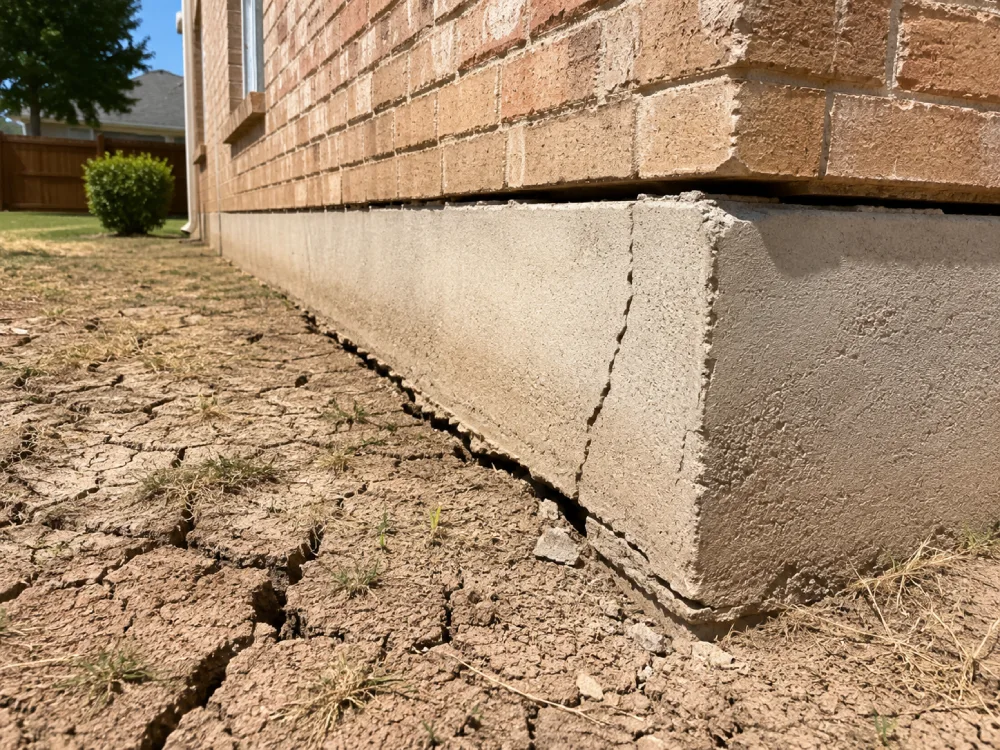
Most of the soil across the Metroplex, including areas like Dallas, Fort Worth, and Frisco contains a high percentage of expansive clay. Unlike sandy or rocky soil, clay particles are extremely small and have a strong ability to absorb water. The Texas A&M AgriLife Extension Service has published guidance for homeowners on managing expansive clay soils in North Texas because of how common this issue is across the region. When clay soil gets wet, it swells, sometimes significantly. When it dries out, it shrinks back down, and that shrinking can pull soil away from the edges of a foundation, leaving gaps and unsupported areas underneath the slab.
This swelling and shrinking cycle repeats every year as the seasons change. Wet winters and spring rains cause the soil to expand. Hot, dry summers cause it to contract. Over years of this cycle, the constant movement puts stress on a home’s foundation that concrete and steel were never designed to fully resist without settling at least somewhat over time.
Why this affects some homes more than others
Not every home experiences the same amount of foundation stress from clay soil, even within the same neighborhood. Several factors play a role, including how the home’s foundation was originally engineered, how well the yard drains water away from the slab, whether large trees are planted close to the foundation, and how consistently the soil around the home receives moisture throughout the year.
Large trees are a particularly common and often overlooked factor. Tree roots pull significant amounts of water from the soil, which can create uneven moisture levels around different sides of a foundation. A tree planted close to one corner of a house can cause that corner to dry out and shrink faster than the rest of the slab, leading to uneven settling that shows up as cracks or sloping floors on that specific side of the home.
Signs your home may be dealing with clay soil related movement
Because clay soil issues develop gradually, the warning signs tend to build slowly rather than appear all at once. Homeowners often notice small cracks near windows and doors first, followed by doors that stick or no longer latch properly. In more advanced cases, floors may develop a noticeable slope, and gaps can appear between walls and ceilings or around baseboards. These signs are essentially the foundation telling you that the soil beneath it is no longer providing even, consistent support.
What homeowners can do to reduce the impact
While you cannot change the soil composition underneath your home, there are practical steps that help reduce how much that soil swells and shrinks throughout the year, which in turn reduces stress on your foundation.
Consistent watering around the foundation, especially during dry summer months, helps keep soil moisture levels more stable rather than letting the ground dry out and contract sharply. Many homeowners install a simple soaker hose system along the foundation perimeter and run it on a schedule during extended dry periods. This is one of the most cost effective preventative steps available and something we regularly recommend to homeowners after an inspection.
Proper drainage is equally important. Our drainage solutions and French and surface drains services are specifically designed to direct water away from the foundation, rather than letting it pool near the slab, which helps prevent one side of the home from absorbing significantly more moisture than another. If you notice water pooling near your foundation after rain, that is worth addressing before it becomes a long term issue.
Finally, if you have large trees close to your home, it is worth having a professional assess whether root barriers or different watering practices are needed to reduce the moisture imbalance they can create.
When soil related movement becomes a repair issue
Preventative steps help slow down foundation stress, but they cannot fully stop it, especially in homes that are decades old or that were built before modern foundation engineering practices became standard. If you are already noticing cracks, sticking doors, or sloped flooring, watering and drainage adjustments alone will not correct existing damage. At that point, the right next step is a professional foundation repair inspection to determine whether the movement is stable or ongoing, and what type of repair, such as pier installation, would restore proper support to the affected area.
Why this matters if you are buying or have recently bought a home in DFW
If you are searching for a home in the Metroplex, understanding clay soil behavior is genuinely useful information, not just trivia. Homes in certain neighborhoods with heavier clay content or older foundation designs may be more prone to movement over time. An engineer report or a free foundation inspection before or shortly after purchasing a home can give you a clear picture of its current condition and help you plan for any preventative maintenance early, rather than being caught off guard years later.
How professionals actually measure foundation movement
When a technician evaluates a home for clay soil related settling, the process is more precise than simply eyeballing a crack. Elevation readings are taken at multiple points across the foundation using a level or laser measuring tool, which creates a kind of topographic map of the slab showing exactly where it sits higher or lower relative to the rest of the home. This data matters because it distinguishes between a foundation that has settled evenly, which is generally less concerning, and one that has settled unevenly at specific points, which is a stronger indicator of active soil related movement.
These elevation readings also give a baseline for comparison if the same home is inspected again in the future. If a homeowner has a repair done and wants to confirm the foundation has remained stable a year or two later, having that original measurement data makes the comparison objective rather than relying on memory or guesswork about whether a crack looks different than it used to.
Common myths about clay soil and foundation repair
A few misconceptions come up often enough that they are worth addressing directly. One common myth is that watering your foundation is unnecessary or even harmful. In reality, consistent moisture around the perimeter of a slab, especially during dry summer months, is one of the most effective and inexpensive ways to reduce the shrinking side of the clay soil cycle, and most foundation professionals actively recommend it rather than warn against it.
Another myth is that foundation repair is a one time fix that guarantees a home will never move again. No repair can stop clay soil from naturally expanding and contracting with the seasons. What a proper repair does is restore support to the areas that have settled and, when paired with a solid warranty, protects you if that specific area needs attention again down the road. Understanding this distinction helps set realistic expectations rather than assuming something went wrong if minor seasonal shifts continue after a repair.
A third myth is that only older homes are at risk. While older homes built before modern foundation engineering practices can be more vulnerable, newer homes are not immune, particularly if a large tree was planted too close to the slab or if drainage around the property was not properly graded during construction.
Simple seasonal habits that protect your foundation year round
Because the clay soil cycle repeats every year, building a few simple habits into your regular home maintenance routine goes a long way toward reducing long term stress on your foundation. During the hottest, driest stretches of summer, running a soaker hose along the foundation perimeter for a short period a few times a week helps keep soil moisture more consistent rather than letting the ground crack and pull away from the slab. During wetter months, keep an eye on how quickly water drains away from your home after a heavy rain, since standing water near the foundation for extended periods can create the opposite problem of excess swelling in that specific area.
Trimming back irrigation or adjusting sprinkler placement so water is not concentrated unevenly on one side of the house also helps prevent lopsided moisture levels that can lead to uneven settling over time. None of these habits require professional help or significant cost, but together they meaningfully reduce the swings between swelling and shrinking that cause the most foundation stress across the Metroplex each year.
Get In Touch
Clay soil is not something homeowners in Dallas Fort Worth can avoid, but it is something you can manage. Consistent moisture around your foundation, good drainage, and attention to nearby trees all help reduce the swelling and shrinking cycle that causes the most damage. If you are already seeing warning signs in your home, a free inspection is the clearest way to understand exactly what is happening beneath the surface and what it will take to fix it properly.
Texas clay soil is tough on every foundation in DFW, but you do not have to guess how it is affecting your home. Top Level Foundation offers free inspections, drainage solutions, and expert guidance to help protect your foundation year round. Contact us today for a clear, honest assessment.