

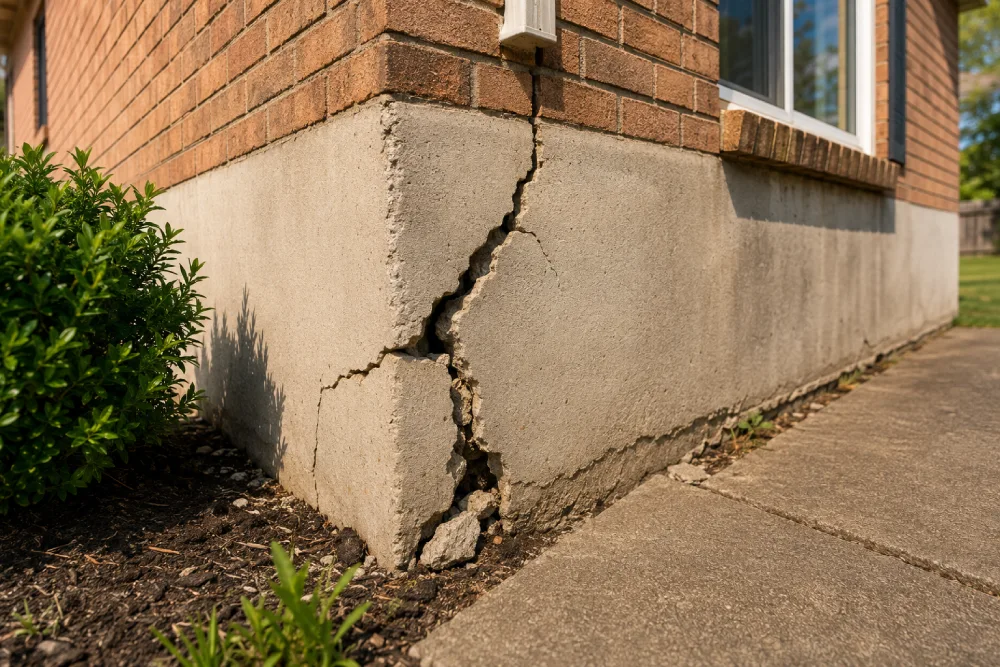
Many homes have foundation cracks and not all foundation cracks indicate a serious problem. Some are natural and will not cause any concern and some will lead to significant foundation issues and will require attention. Being able to tell the difference will save you from wasting time fixing the issue and save you money in the future from unnecessary damage. Learn the warning signs, the various types of crack, and when to call in a foundation professional so you can keep your home safe and its value intact.
Serious vs Cosmetic Foundation Cracks: Warning Signs Every Homeowner Should Know
At first sight, cracks in the foundation can be mistaken for cracks in any other part of the house, leaving you wondering if they’re a cause for concern or not. By examining their size, direction, location and any associated issues near your home you can tell if they need professional repair.
Read more: Most Common Causes of Foundation Damage in Texas Homes
Ensure the Width of the Crack is correct
Hairline cracks, less than 1/8” wide, are typically a cosmetic issue, and may be attributed to normal settling. Cracks that widen or are over one-quarter inch in width are more likely to be a problem with foundation movement or stress and warrant further investigation.
Examine the Direction of the Crack
Typically, vertical cracks are not a serious problem and are merely a consequence of normal concrete shrinkage. Horizontal cracks, on the other hand, are often more serious and may be a sign of pressure caused by surrounding soil, and, over time, may weaken the foundation wall.
Look for Stair Step Cracks
Brick, concrete block or masonry foundations are typically the areas where stair step cracks are found. Cracks that are smaller are likely caused by minor settlements; larger or growing crack may be indicative of unequal settling of the foundations, and should be checked before the damage occurs.
Measure of how fast the Crack is growing
An annual growth of a crack is a bigger problem than a crack that doesn’t grow for years. If either end is marked with a pencil and checked periodically, it can be determined if movement is taking place.
Inspect for any water leaks
Any cracks that water can enter into your basement/crawl space should be addressed and never ignored. When moisture is present it can make the building material less solid, can allow mould to grow and can lead to long term damage to the foundations if repairs are not made in time.
Watch out for Uneven Floors
The house may be subject to foundation movement that impacts the rest of the house. Cracks in the foundations may be causing structural movement which may be evident on sloping floors, doors that stick, windows that no longer close well or gaps around trim.
Take into account the Age of the Home
Over time, newer homes may develop minor cosmetic cracks in the curing process and as a house settles. If a home that is not new has cracks that appear or have grown in size, it needs attention as it could be a sign of a change in soil or foundation issues.
Inspect Both Inside and Outside
Don’t pay attention to interior walls only. Do an exterior tour of your home and check foundation walls, brickwork and surrounding concrete surfaces. A comparison with both sides will provide a better understanding of the severity of the crack.
Know When to Call a Professional
If the cracks are wide, horizontal, water leaking or have structural warning signs, have a professional foundation inspection. Early repairs typically are less expensive than those when major damage has occurred.
Conclusion
While not all foundation cracks indicate a serious issue, it is important to be aware of warning signs so you can make informed decisions. Smaller cracks that are vertical are more likely cosmetic and wider vertical or horizontal cracks or growing cracks may be structural. You can save your home from expensive repairs by regularly checking and acting fast if there’s a change. If you’re in any doubt about whether a crack is in need of repair, it is better to have a professional foundation repair specialist assess the situation to alleviate your fears and to avoid larger issues down the road.
FAQs
Do all foundation cracks pose a problem?
No. Numerous tiny cracks in the vertical direction are a matter of aesthetics and are caused by natural settling.
Which of the following types of foundation cracks are the worst?
If you see horizontal, wide or growing cracks, this is a sign of structural issues that need to be assessed by a professional.
Will foundation cracks allow water to seep in?
Yes. Moisture can seep in through even minor cracks and cause water damage!
When should I check for foundation cracks?
Visually check for cracks monthly and after storms or extreme weather.
Should cosmetic foundation cracks be fixed?
Simple cosmetic cracks may be easily sealed, but keep an eye on them for further expansion.