

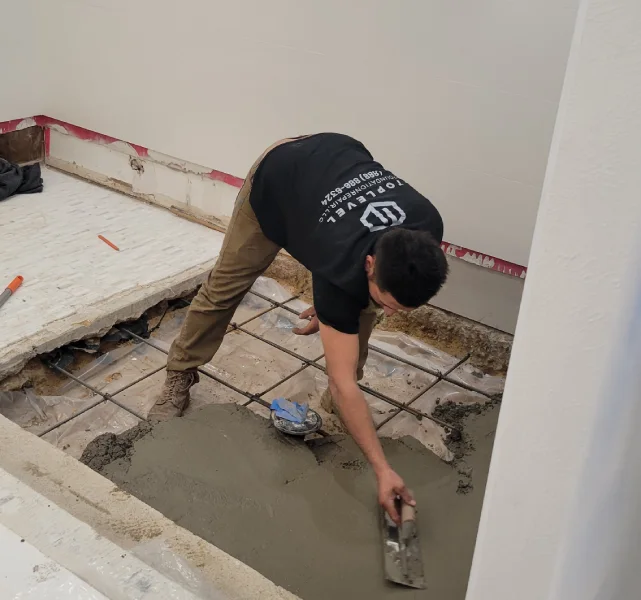
If you have a concrete slab foundation which is the most common type in the Dallas-Fort Worth area you might have heard the terms ‘floating slab’ and ‘monolithic slab’ used interchangeably. They’re not the same thing. Understanding the difference matters when it comes to repairs, maintenance, and knowing what to expect from your foundation.
What Is a Monolithic Slab?
A monolithic slab is poured all at once the footing and the floor slab are a single continuous piece of concrete. The edges are thicker (typically 12–24 inches deep) to act as the foundation’s footings, while the interior is thinner (usually 4–6 inches). Monolithic slabs are faster and less expensive to pour, and they’re extremely common in newer DFW homes built from the 1980s onward.
What Is a Floating Slab?
A floating slab consists of two separate pours. First, the footing is poured and cured. Then the interior slab is poured separately, ‘floating’ on top of the ground inside the footing perimeter. The slab is not attached to the footing it literally floats. This design is often used for garages, workshops, and additions rather than primary home foundations.
Key Differences Between the Two
Monolithic slabs are stronger and more stable for primary living areas because the footing and slab move together as one unit. Floating slabs, because they are independent of the footing, can shift independently which can cause cracking, separation, and drainage issues at the edges. In Texas, where soil movement is extreme, monolithic slabs are generally preferred for homes.
Which Type Is More Common in DFW?
The vast majority of homes in Dallas, Fort Worth, Frisco, Plano, and surrounding areas use monolithic slab foundations. The expansive clay soil in North Texas requires a foundation design that distributes load evenly and the monolithic slab, often reinforced with post-tension cables or rebar, handles soil movement better than a floating design.
How Does Each Type Fail?
Monolithic slabs typically fail through differential settling where sections of the slab drop at different rates due to soil erosion, plumbing leaks, or drought. Floating slabs can fail in similar ways but are also prone to edge separation from the footing, especially in areas with significant drainage problems.
Repair Methods
Both slab types are repaired using similar methods—steel piers, concrete piers, or mudjacking but the repair approach depends on where and how the failure is occurring. The overall foundation repair cost varies based on the extent of settlement, the number of piers needed, and the foundation type being repaired. Homeowners can also review Foundation Repair Network for more information about common repair methods and pricing factors.
Not sure what type of foundation your home has or whether it needs repair? Top Level Foundation offers free inspections across the DFW Metroplex. Let our experts evaluate your slab and give you an honest assessment.