

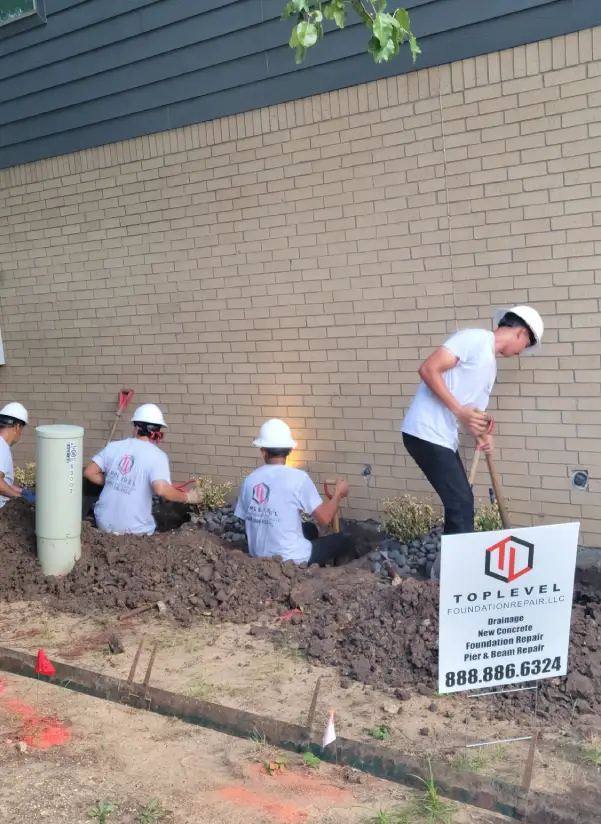
Your home’s foundation is the most critical structural element holding everything together. In the Dallas-Fort Worth area, expansive clay soil causes constant movement beneath homes and over time, that movement shows up in ways you can see. If you catch the signs early, repairs are faster, simpler, and far less expensive. Here are the 7 signs you should never ignore.
1. Cracks in Your Interior Walls or Ceilings
Not all cracks are equal, but diagonal cracks running from the corners of windows or doors especially in a staircase pattern almost always point to foundation movement. Hairline cracks in paint can be normal settling, but cracks wider than 1/4 inch need professional evaluation immediately.
2. Doors and Windows That Stick or Won’t Close
When your foundation shifts, your home’s frame shifts with it. Doors that used to close perfectly now drag along the floor or won’t latch. Windows become difficult to open or close. This misalignment is one of the earliest and most common signs of foundation trouble in DFW homes.
3. Uneven or Sloping Floors
If you place a marble on your floor and it rolls on its own, that’s a problem. Sloping or bouncy floors especially in pier and beam homes indicate the foundation supports beneath are failing. This is particularly common in older Dallas neighborhoods with high moisture variability.
4. Gaps Around Door Frames or Window Frames
Visible gaps between your door frame and the wall, or between window frames and the surrounding drywall, indicate the structure is pulling apart. This is a clear sign of differential settling where one section of your foundation is dropping faster than another.
5. Cracks in Exterior Brick or Mortar
Stair-step cracks in exterior brick or mortar joints are a classic sign of foundation movement. Because brick has no flexibility, it fractures under pressure. If you see these cracks widening over weeks or months, foundation movement is actively occurring.
6. Water Pooling Near Your Foundation
Poor drainage is both a symptom and a cause of foundation problems. If water consistently pools against your home after rain, it saturates the soil unevenly, causing sections of your foundation to heave or settle. Getting proper drainage installed early can prevent major foundation damage.
7. Separation Between Walls and Ceiling or Floor
Visible gaps where your walls meet the ceiling or where baseboards are pulling away from the floor are serious warning signs. These gaps form as sections of your home move independently a direct result of foundation instability.
If you're seeing any of these signs in your DFW home, don't wait. Contact Top Level Foundation today for a free inspection and get expert guidance on your next steps.