

One of the most common questions we hear from homeowners across Dallas, Fort Worth, and the surrounding suburbs is whether their homeowners insurance will help pay for foundation repair. It is a completely reasonable question, since foundation repair costs can range anywhere from a few thousand dollars for minor crack repair to well over ten thousand dollars for more extensive pier work. You can see our full breakdown of foundation repair costs and frequently asked questions on our homepage. Unfortunately, the insurance answer is not a simple yes or no, and understanding how insurance actually treats foundation damage can save you time, frustration, and unnecessary phone calls to your provider.
The short answer
In most cases, standard homeowners insurance policies do not cover foundation repair caused by normal soil movement, settling, or gradual shifting. This is because standard policies are designed to cover sudden, accidental damage, not slow, ongoing wear that develops over months or years. The Texas Department of Insurance publishes consumer guidance explaining that most homeowners policies specifically exclude gradual earth movement and settling from coverage. Since the majority of foundation issues in North Texas are caused by expansive clay soil expanding and contracting with the seasons, most claims related to this type of damage are denied.
That said, there are specific situations where insurance may step in, which is why it is always worth checking your individual policy rather than assuming coverage does or does not apply.
When insurance may actually help
Homeowners insurance is more likely to cover foundation damage when it results from a sudden, identifiable event rather than gradual settling. Examples include a burst plumbing pipe underneath the slab that causes rapid water damage, foundation damage from a fire, or, in some cases, damage tied to a covered natural disaster depending on your specific policy language.
Plumbing related foundation damage is actually one of the more common exceptions homeowners are surprised to learn about. If a pipe beneath your slab leaks or bursts and causes soil erosion or shifting underneath the foundation, some policies will cover the resulting structural repair, even though they would not cover damage from ordinary seasonal soil movement. This is why, during our hydrostatic plumbing test and inspections, we always check for signs of plumbing related moisture issues in addition to typical settling patterns, since it can genuinely change how a claim is handled.
Why most claims for gradual settling get denied
Insurance companies generally classify gradual foundation settling as a maintenance issue rather than a covered peril. From their perspective, foundation movement caused by seasonal soil expansion and contraction is considered a known, expected risk of homeownership in areas with expansive clay soil, similar to how normal wear and tear on a roof is typically excluded from coverage. This distinction between sudden covered events and gradual expected wear is the core reason most standard claims for foundation settling do not get approved.
What about foundation repair warranties
Since insurance often will not cover routine settling, many homeowners rely instead on repair warranties for protection going forward. A solid warranty on foundation repair work means that if the same area experiences movement again after a professional repair, you are covered without paying full price a second time. You can read more about our approach and what sets our work apart on our Why Top Level page. This is different from insurance coverage, since a warranty protects the quality and longevity of the repair itself, rather than covering the original cause of damage. When choosing a foundation repair company, it is worth asking directly what type of warranty applies to the specific repair method being used.
Steps to take before assuming coverage either way
Rather than assuming your policy will or will not help with a repair, the most reliable approach is to call your insurance provider directly and ask specifically about foundation damage coverage, including any exclusions related to soil movement, settling, or expansive clay. Have your policy number ready and ask them to point you to the exact section of your policy that addresses earth movement or settling exclusions, since this language varies by insurer.
It can also help to have a written inspection report from a foundation repair professional before contacting your insurer. If there is any possibility the damage relates to a plumbing leak rather than ordinary settling, documenting that clearly can make a real difference in how a claim is evaluated.
What this means for budgeting your repair
Since most foundation repair in Texas ends up being an out of pocket homeowner expense rather than an insurance covered event, it is worth getting a clear, itemized estimate before committing to any repair method. A trustworthy foundation repair company should walk you through exactly what is being repaired, why that specific method was chosen, and what warranty applies once the work is complete, so you know exactly what you are paying for and what protection you have going forward.
What documentation to keep if you decide to file a claim
If you believe your foundation damage might qualify for coverage, for example if you suspect a plumbing leak caused the movement rather than ordinary settling, documentation makes a real difference in how smoothly the claims process goes. Keep dated photos of any visible cracks or damage from the moment you first notice them, since insurers often want to see how a problem progressed over time rather than a single snapshot.
A written inspection report from a licensed foundation repair company carries more weight than a homeowner’s own description of the damage. If the report identifies a specific, sudden cause such as a plumbing leak, ask that this be stated clearly and directly in the report, since vague language about general settling can work against you during a claims review. It is also worth keeping copies of any plumbing repair invoices if a leak was involved, along with the original inspection report and any follow up correspondence with your insurance adjuster, all organized in one place so you are not scrambling to find documents if the claim is questioned or appealed.
How financing options work when insurance does not cover repair
Since insurance denial is the more common outcome for clay soil related settling, many homeowners look into financing options to spread out the cost of repair rather than paying the full amount upfront. Many foundation repair companies offer financing plans directly, which typically involve a credit approval process similar to financing a large appliance or home improvement project, with monthly payments over a set term.
Before choosing a financing option, it is worth comparing the total cost over the life of the plan, not just the monthly payment amount, since longer terms can sometimes mean paying significantly more in interest over time even if the monthly number looks more manageable. Ask directly whether the financing has a promotional interest free period, what the standard rate is after that period ends, and whether there are any penalties for paying the balance off early. A transparent company will walk you through these numbers clearly before you sign anything, rather than leaving the details buried in fine print.
Questions worth asking any foundation repair company before you sign
Regardless of whether insurance or financing is involved, a few direct questions tend to reveal whether a company is being fully transparent with you. Ask exactly which repair method they recommend and why that method fits your specific soil and settling pattern rather than a generic, one size fits all approach. Ask how many piers or repair points are included in the estimate, since vague estimates that do not specify a number can sometimes lead to unexpected additional costs once work begins.
Ask what the warranty actually covers, how long it lasts, and whether it transfers to a new owner if you sell the home, since a transferable warranty can be a meaningful selling point later. Finally, ask whether the estimate is truly free and whether there is any obligation tied to receiving it. A company confident in its work should have no hesitation walking you through every one of these questions clearly and in plain language.
It is also worth asking how long the company has been operating in the Dallas Fort Worth area specifically, since local experience with our particular soil conditions genuinely matters more here than general foundation repair experience gained elsewhere. A company that has worked across a wide range of neighborhoods in the Metroplex has likely seen how different soil compositions, drainage patterns, and home ages behave over time, which tends to translate into more accurate diagnoses and more appropriate repair recommendations for your specific property.
Get In Touch
For most homeowners in Dallas Fort Worth, foundation repair caused by normal clay soil movement will not be covered by a standard homeowners insurance policy, though exceptions exist for damage tied to sudden events like plumbing leaks. Rather than guessing, call your insurance provider directly with specific questions about settling and earth movement exclusions. And regardless of what your policy covers, scheduling a free inspection with a company that offers a strong, clearly explained warranty gives you protection that insurance often will not.
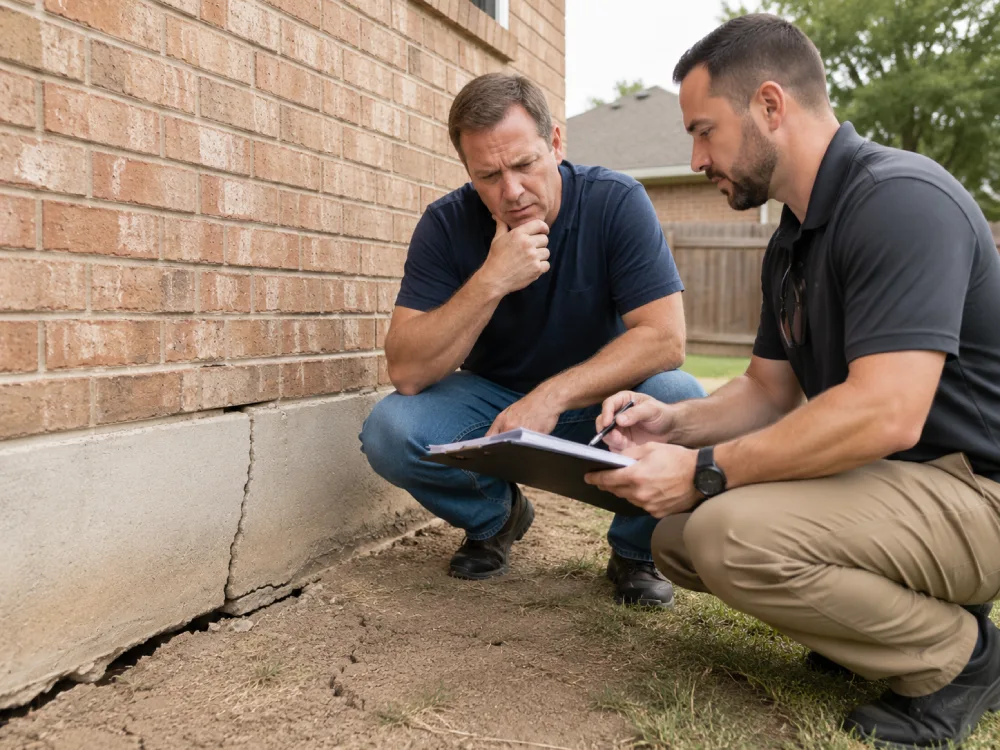
Not sure if your foundation repair is covered by insurance? Top Level Foundation gives you a straight answer, along with a free inspection, an honest estimate, and warranty options that protect you either way. Contact us today to find out exactly where you stand.