

Texas summers are hard on more than just your air conditioning bill. The same heat that dries out your lawn is working against your home from below, and if you live anywhere in the Dallas Fort Worth Metroplex, your foundation is likely sitting on expansive clay soil that shrinks as it loses moisture. That shrinking and swelling cycle is one of the biggest causes of foundation movement in North Texas, and summer is when it accelerates fastest.
Most homeowners do not think about their foundation until something goes visibly wrong, like a door that will not close or a crack that suddenly seems bigger than it was last month. The truth is that foundation problems rarely appear overnight. They build slowly, and the earlier you catch them, the less expensive they are to fix. Below are the signs our technicians see most often across Dallas, Fort Worth, Plano, and Frisco, along with what each one usually means.
Cracks in drywall or brick exterior
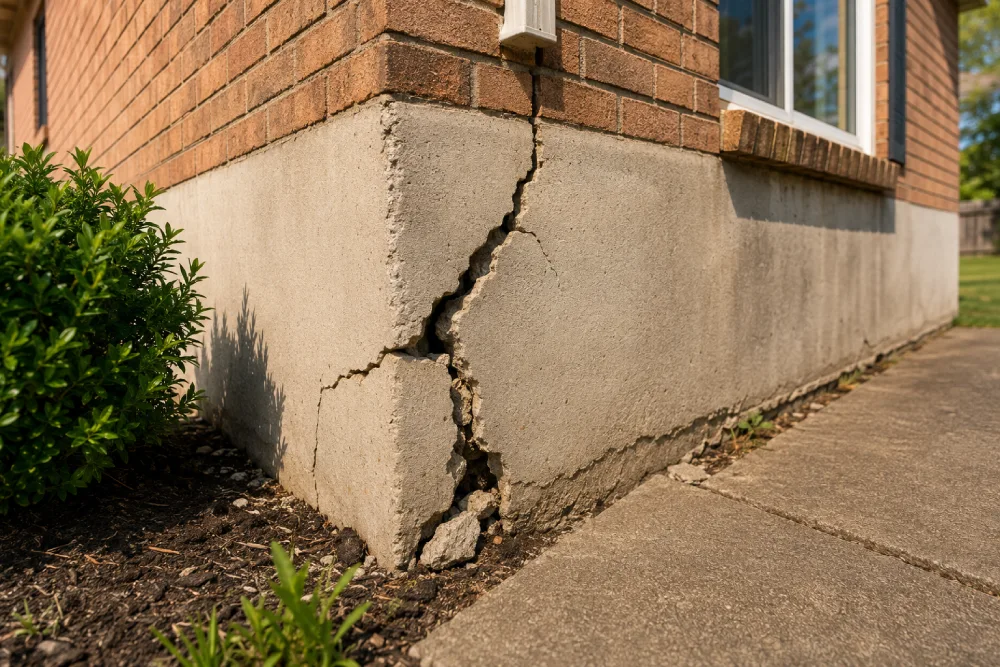
Hairline cracks above doorways or in the corners of windows are one of the most common early signs of foundation settling. Interior drywall cracks tend to show up first because drywall is more flexible than brick, but it still reacts to movement underneath the slab. Exterior brick cracks, especially ones that run in a stair step pattern along the mortar lines, are a stronger signal that the foundation itself has shifted rather than the house simply settling normally after construction.
Not every crack means you need repair work. Small, thin cracks under about one eighth of an inch are common in almost every home and are often cosmetic. What matters is whether the crack is growing, whether it appears in multiple places at once, and whether it lines up with other symptoms on this list.
Doors and windows that stick or will not latch
When a foundation shifts even slightly, door frames and window frames shift with it. You might notice a door that used to close easily now needs a shoulder to shut, or a window that used to slide open smoothly now catches halfway. This happens because the frame is no longer perfectly square, and it is one of the most reliable early indicators homeowners notice on their own, often before they ever see a crack.
Uneven or sloping floors
If you have ever set a ball on the floor and watched it roll toward one side of the room, you already know this sign. Sloping floors happen when part of the foundation settles lower than the rest, which is common with pier and beam homes but also happens with concrete slab foundations over clay soil. A level or a simple marble test can help you spot this before it becomes obvious to the eye.
Gaps between walls and ceiling or floor
Small gaps where the wall meets the ceiling, or where baseboards pull away from the floor, are another sign that the structure above the foundation is shifting to accommodate movement below it. These gaps tend to widen gradually and are easiest to catch if you walk your home every few months and look closely at corners and trim lines.
Doors and gates outside that no longer align
Foundation issues are not limited to the interior. If you have a side gate or garage door that used to line up perfectly and now looks slightly crooked, that can be a sign the slab has shifted at that corner of the house. Exterior clues are often overlooked because homeowners assume the issue is with the gate hardware rather than the foundation underneath it.
Why summer specifically makes this worse in DFW
North Texas sits on expansive clay soil that behaves almost like a sponge. According to the USDA Natural Resources Conservation Service soil survey program, much of the North Texas region contains clay rich soils that are officially classified as having a high shrink swell potential. During wet months, the soil absorbs moisture and swells slightly, which can push up on parts of the foundation. During the hot, dry summer months, that same soil loses moisture and contracts, pulling support away from sections of the slab. This constant swelling and shrinking cycle is what causes uneven settling over time, and the swing between a wet spring and a dry, triple digit summer is often the most dramatic shift of the year.
If your home already had minor settling from previous seasons, summer heat can accelerate the movement and turn a small, manageable issue into a larger structural one. This is exactly why late spring and early summer are when we see the highest volume of new inspection requests across the Metroplex.
What to do if you notice these signs
The good news is that catching these signs early almost always means a simpler, less expensive repair. A free foundation inspection is the fastest way to know whether what you are seeing is cosmetic or structural. During an inspection, a technician will check elevation readings across your slab, examine cracks both inside and outside your home, and give you a clear, honest assessment of whether repair is needed now or whether the issue is something to monitor.
We serve homeowners across the entire DFW Metroplex, and you can see the full list of areas we serve at the bottom of our homepage. Every inspection includes a written explanation of what we found and what your options are. There is no pressure to move forward immediately if the issue is minor. You can also read what past customers had to say on our reviews page before you decide who to call.
What a professional inspection actually involves
Many homeowners picture a foundation inspection as someone walking around the outside of the house and glancing at a few cracks. A proper inspection is more thorough than that. A technician will typically take elevation readings at multiple points across the slab using a level or laser tool, which shows exactly how much the foundation has shifted and in which direction. They will also walk the interior of the home checking for cracks in drywall, gaps at baseboards, and doors or windows that no longer close properly, since these interior clues often tell a more complete story than exterior cracks alone.
A good inspector will also ask about the age of the home, whether any repairs have been done before, whether there are large trees near the foundation, and how the yard drains after heavy rain. All of this context matters because two homes with identical cracks can have very different underlying causes depending on soil conditions, drainage, and landscaping. At the end of the inspection, you should receive a clear explanation of what was found, in plain language, along with photos or measurements to back it up rather than a vague verbal opinion.
Common mistakes homeowners make before calling a professional
We see a few patterns repeat often enough that they are worth mentioning directly. The first is waiting too long after noticing a sign, hoping it will stop on its own. Foundation movement caused by clay soil rarely resolves itself, and waiting typically means the eventual repair is larger and more expensive than it would have been earlier.
The second common mistake is trying to fix the symptom rather than the cause. Patching a crack with caulk or filling a gap with trim without addressing the underlying settling might hide the problem temporarily, but the movement continues underneath, and the same crack or a nearby one usually reappears within a year or two.
The third mistake is assuming every inspection comes with high pressure sales tactics, which leads some homeowners to avoid getting an inspection altogether even when they suspect something is wrong. A trustworthy company will give you an honest assessment, including telling you when something is cosmetic and does not need immediate repair, rather than pushing every homeowner toward the most expensive option available.
A simple monthly checklist for the rest of summer
Since summer is when soil related movement tends to accelerate, a short monthly walkthrough of your home can help you catch changes early rather than discovering them all at once at the end of the season. Check the corners of doorframes and windows for any new hairline cracks, and take a photo each time so you have a record to compare against later. Try opening and closing doors that have historically been a little tight to see whether they have gotten noticeably harder to shut over the past few weeks. Walk the exterior perimeter of your home and look at the brick or siding for any new cracking, and check whether your gutters are actually directing water away from the foundation after the last rain rather than letting it pool near the slab. None of this takes more than a few minutes, and having dated photos on hand makes it much easier for an inspector to understand how quickly, or how slowly, any changes have developed if you do decide to schedule a visit.
Get In Touch
Foundation problems do not fix themselves, and Texas summers tend to expose issues that were already forming underneath the surface. If you have noticed even one of the signs above, especially a crack that seems to be growing or a door that has gotten harder to close over the past few months, it is worth getting a professional opinion before the season gets any hotter. A quick, free inspection now could save you thousands in repair costs later, and it gives you peace of mind heading into the hottest months of the year.
Noticing cracks, sticking doors, or uneven floors this summer? Top Level Foundation offers free inspections across DFW to catch foundation issues early, before the Texas heat makes them worse. Contact us today and get a straight answer about what your home actually needs.